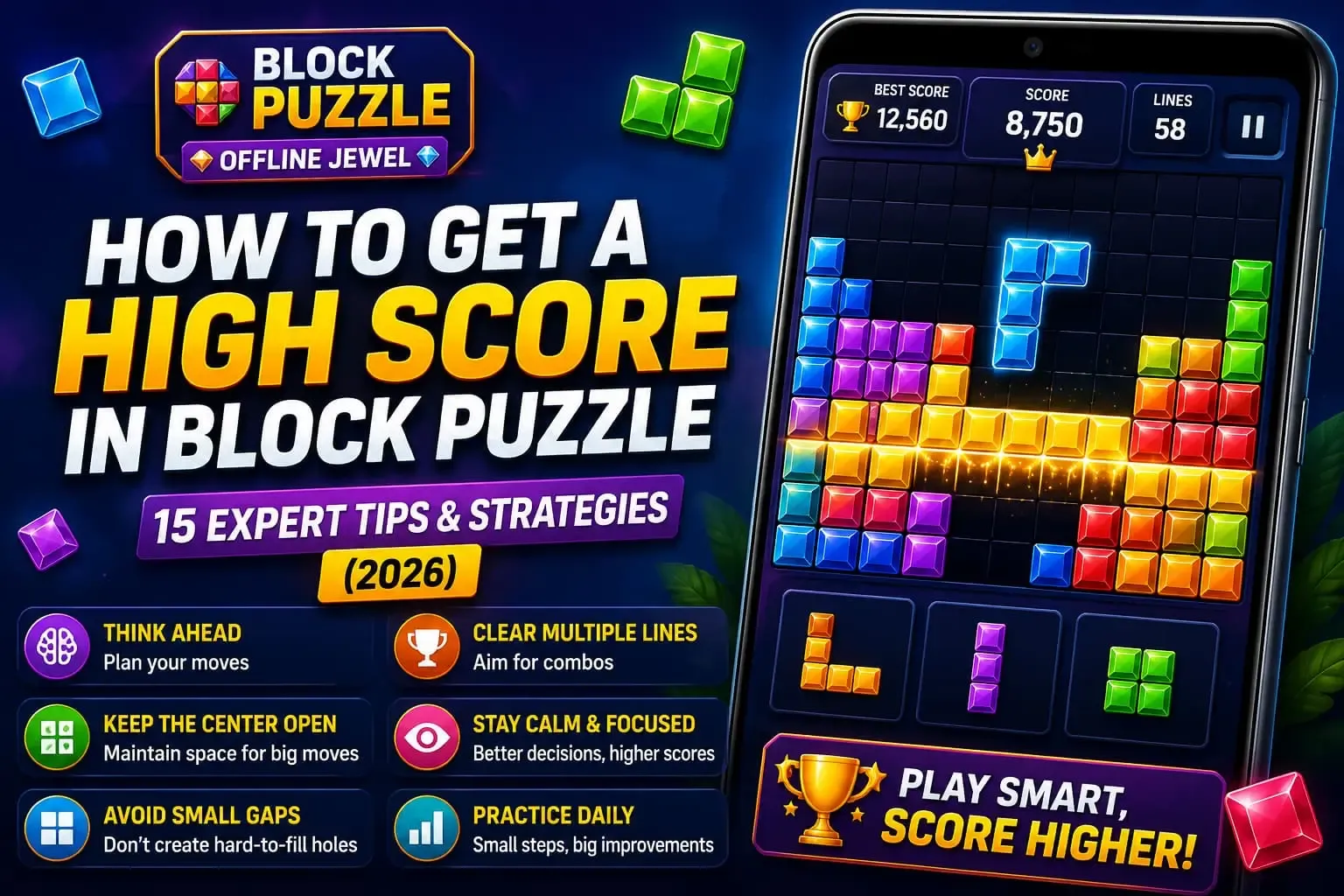
How to Get a High Score in Block Puzzle: 15 Expert Tips and Strategies.

July 22, 2026

How to Get a High Score in Block Puzzle: 15 Expert Tips and Strategies.

Block Puzzle looks simple when you first start playing. You drag colorful blocks onto a board, clear rows and columns, and try to keep the game going for as long as possible. The controls are easy to learn, which makes it appealing to players of all ages.

But after a few games, many players notice something frustrating.

No matter how carefully they play, their score seems to hit the same limit over and over again.

The difference between an average score and an impressive one isn't luck—it's strategy.

The highest-scoring players don't simply place the first block that fits. They constantly think ahead, manage space wisely, and avoid mistakes that slowly trap them until there are no possible moves left.

Whether you've just downloaded the game or you're trying to beat your personal best, these expert tips will help you play smarter, survive longer, and consistently achieve higher scores.


What Makes a Good Block Puzzle Strategy?

The best Block Puzzle strategy is to think several moves ahead, manage empty space carefully, and avoid placing blocks that limit your future options. High scores come from planning, not speed.

Unlike many puzzle games, Block Puzzle doesn't rush you.

There are no timers.

No falling pieces.

No countdowns.

This gives you one major advantage—you have time to think.

Every move changes the board, so each placement should help you both now and in the future.

The following strategies are used by experienced players to maximize their scores.


1. Think Several Moves Ahead

One of the biggest mistakes beginners make is focusing only on the current block.

Experienced players look at every available piece before making a move.

Ask yourself:

  • Will this placement make room for larger pieces later?
  • Could another position create more opportunities?
  • Am I blocking valuable space?

Planning just two or three moves ahead can dramatically improve your score.


2. Keep the Center of the Board Open

The middle of the board is your most valuable area.

It gives you flexibility to place almost every block shape.

If the center becomes crowded too early, you'll quickly run out of options.

Instead, build around the edges while keeping a large open area in the middle whenever possible.

This gives you far more freedom during difficult situations.


3. Don't Fill the Corners Too Early

Corners are surprisingly difficult to recover once they're blocked.

Many large block shapes require open corners to fit properly.

If you carelessly fill them with small pieces, you may later discover that important blocks have nowhere to go.

Whenever possible, leave corners available until you're confident they'll remain useful.


4. Save Space for Large Blocks

One large square piece can instantly end your game if you've only left narrow gaps.

Instead of thinking about the current move alone, always leave enough open space for larger block combinations.

A good rule is to regularly check whether your board could accommodate the largest shapes in the game.

If not, start creating space immediately.


5. Clear Multiple Lines at Once

Clearing one line feels satisfying.

Clearing two or three lines together is even better.

Instead of immediately completing every available row, sometimes it's worth waiting one or two moves if it allows you to clear multiple lines at once.

This creates more open space and often leads to longer games.

Patience usually beats rushing.


6. Avoid Small Empty Holes

Tiny single-square gaps may not seem like a problem.

Eventually, however, they become difficult to fill.

These awkward spaces reduce your available moves and make the board increasingly difficult to manage.

Whenever possible, build clean, even surfaces instead of leaving isolated empty squares.

A tidy board is much easier to play.


7. Learn Every Block Shape

The more familiar you become with different block shapes, the faster you'll recognize the best placement.

Experienced players don't need to stop and analyze every piece.

They instantly recognize where it belongs.

After enough practice, you'll naturally begin predicting how different shapes work together.

This improves both speed and decision-making without feeling rushed.


8. Don't Chase Quick Points

New players often clear the first available line because it feels productive.

Unfortunately, this can sometimes make the board harder to manage later.

Instead of asking:

"Can I clear a line right now?"

Ask:

"Will this move help me survive longer?"

Long games almost always produce higher scores than quick line clears.

Think about building a board that stays flexible rather than one that scores immediately.

9. Always Leave Yourself Multiple Options

One of the easiest ways to lose in Block Puzzle is to become too dependent on a single open space.

Imagine you've left only one area where the next block can fit. If a different shape appears, your game could end immediately.

Instead, try to keep several placement options available at all times.

A flexible board gives you room to adapt, while a crowded board forces you into bad decisions.

The more choices you have, the longer you'll survive.


10. Don't Build Tall Columns

Many beginners accidentally create towers by stacking blocks vertically.

Although this may seem harmless at first, tall columns make it difficult to fit wider shapes and reduce your available space.

Instead, aim to keep the board as flat and balanced as possible.

A level playing field gives you far more opportunities to place future blocks.

Whenever you notice one area becoming much taller than the rest, focus on clearing it before it becomes a problem.


11. Balance Risk and Reward

Sometimes the safest move isn't the best move.

For example, you may have the option to clear one line immediately, or wait one turn to clear three lines at once.

The second option carries slightly more risk, but it often rewards you with much more open space.

The key is knowing when to play safely and when to take calculated risks.

Experienced players constantly weigh both possibilities instead of automatically choosing the quickest score.


12. Watch the Entire Board, Not Just One Area

Many players become so focused on a single corner that they forget to monitor the rest of the board.

Great Block Puzzle players are always scanning.

They notice:

  • Empty spaces
  • Upcoming opportunities
  • Dangerous gaps
  • Areas becoming crowded

Developing this habit allows you to solve problems before they become impossible to fix.

Treat the board as one complete puzzle rather than separate sections.


13. Stay Calm When the Board Gets Crowded

Everyone reaches difficult moments where only a few empty spaces remain.

This is often where games are won—or lost.

Many players panic and place blocks as quickly as possible.

Instead, slow down.

Since Block Puzzle has no timer, there's no advantage to rushing.

Take a few extra seconds to evaluate every possible move.

Often, the best solution isn't the most obvious one.

Remaining calm can extend your game by hundreds—or even thousands—of points.


14. Practice a Little Every Day

Like chess, Sudoku, or crossword puzzles, Block Puzzle rewards consistent practice.

You don't need to play for hours.

Even ten minutes a day helps improve:

  • Pattern recognition
  • Strategic thinking
  • Space management
  • Decision-making

Over time, you'll begin recognizing strong moves almost instantly.

Small improvements add up surprisingly quickly.


15. Learn From Every Game

The best players don't simply start another round after losing.

They ask themselves:

  • What caused the game to end?
  • Which move created the biggest problem?
  • Could I have left more space?
  • Did I ignore a better placement?

Reviewing your mistakes is one of the fastest ways to improve.

Every game teaches something new if you're willing to pay attention.


Common Mistakes That Keep Scores Low

Even experienced players occasionally make mistakes. Recognizing these habits can help you avoid ending your game too early.

Filling Corners Too Soon

Corners are difficult to recover once blocked. Keep them flexible whenever possible.

Leaving Small Isolated Gaps

Single empty squares reduce future placement options and make the board harder to manage.

Ignoring Large Block Shapes

Always leave enough room for the biggest pieces in the game.

Chasing Immediate Line Clears

Clearing one line isn't always the smartest move. Think about how your placement affects the next several turns.

Rushing Your Decisions

Block Puzzle rewards thoughtful planning, not speed. Take advantage of the fact that there's no countdown timer.


Why Play Block Puzzle: Offline Jewel?

If you're looking for a Block Puzzle game that lets you apply these strategies, Block Puzzle: Offline Jewel offers everything you need for an enjoyable and rewarding experience.

Classic Endless Mode

Challenge yourself to beat your highest score with unlimited gameplay that rewards smart planning and careful strategy.

Levels Mode

Take on progressively more challenging objectives that encourage you to improve your skills while keeping gameplay fresh and engaging.

Play Offline Anytime

Whether you're traveling, commuting, or simply relaxing at home, you can enjoy uninterrupted gameplay without needing an internet connection.

Beautiful Jewel Graphics

Bright colors, polished animations, and clean visuals create an enjoyable playing experience without unnecessary distractions.

Smooth Performance

The game is lightweight, responsive, and optimized for a wide range of Android devices, ensuring smooth gameplay wherever you play.

Whether you're a beginner learning the basics or an experienced player chasing a new high score, Block Puzzle: Offline Jewel provides a fun, relaxing, and strategic puzzle experience.


Frequently Asked Questions

How do you get a high score in Block Puzzle?

Focus on planning several moves ahead, keeping the center of the board open, avoiding small gaps, and leaving enough space for large block shapes. Long-term strategy consistently produces higher scores than quick moves.


Is Block Puzzle based on luck or skill?

Skill plays a much bigger role than luck. While the available block shapes vary, smart planning, space management, and strategic thinking determine how long you can continue playing.


What's the biggest mistake beginners make?

Many beginners fill corners too early, leave isolated gaps, or clear lines without considering future moves. These mistakes reduce flexibility and often end games prematurely.


Does practicing improve your score?

Yes. Regular practice improves pattern recognition, strategic thinking, and board awareness, making it easier to identify the best placements and achieve higher scores.


Can I play Block Puzzle offline?

Yes. Block Puzzle: Offline Jewel supports full offline gameplay, allowing you to enjoy the game anytime without Wi-Fi or mobile data.


Is Block Puzzle suitable for all ages?

Absolutely. Its simple controls make it easy for children to learn, while the strategic gameplay keeps adults and experienced puzzle fans engaged.


Conclusion

Getting a high score in Block Puzzle isn't about moving faster—it's about thinking smarter. Every placement matters, and the best players understand how to balance short-term gains with long-term strategy.

By keeping the center of the board open, avoiding awkward gaps, planning several moves ahead, and staying calm under pressure, you'll gradually see your scores improve. Like any great puzzle game, success comes from practice, patience, and learning from each round.

If you're ready to put these strategies into action, Block Puzzle: Offline Jewel is the perfect place to start. With its relaxing gameplay, Classic Endless Mode, challenging Levels Mode, offline support, and beautiful jewel-themed design, it offers a rewarding experience for players of every skill level.

Download Block Puzzle: Offline Jewel today, apply these expert tips, and see how high you can climb on your next game.


By Junaid Mir